 Play Store
 App Store
A VIN, or Vehicle Identification Number, is a unique identifier assigned to a vehicle. It is usually 17 characters long and can include letters and numbers. Unlike a registration plate, which can change, the VIN is intended to stay with the vehicle for its lifetime.
For UK used car buyers, the VIN is one of the most important details to compare before purchase. It helps connect the physical vehicle, the V5C logbook, seller information and any available vehicle history. Fast Car Check can show the VIN in the full vehicle report when available, which makes it easier to compare it with the windscreen VIN plate, chassis number and documents.
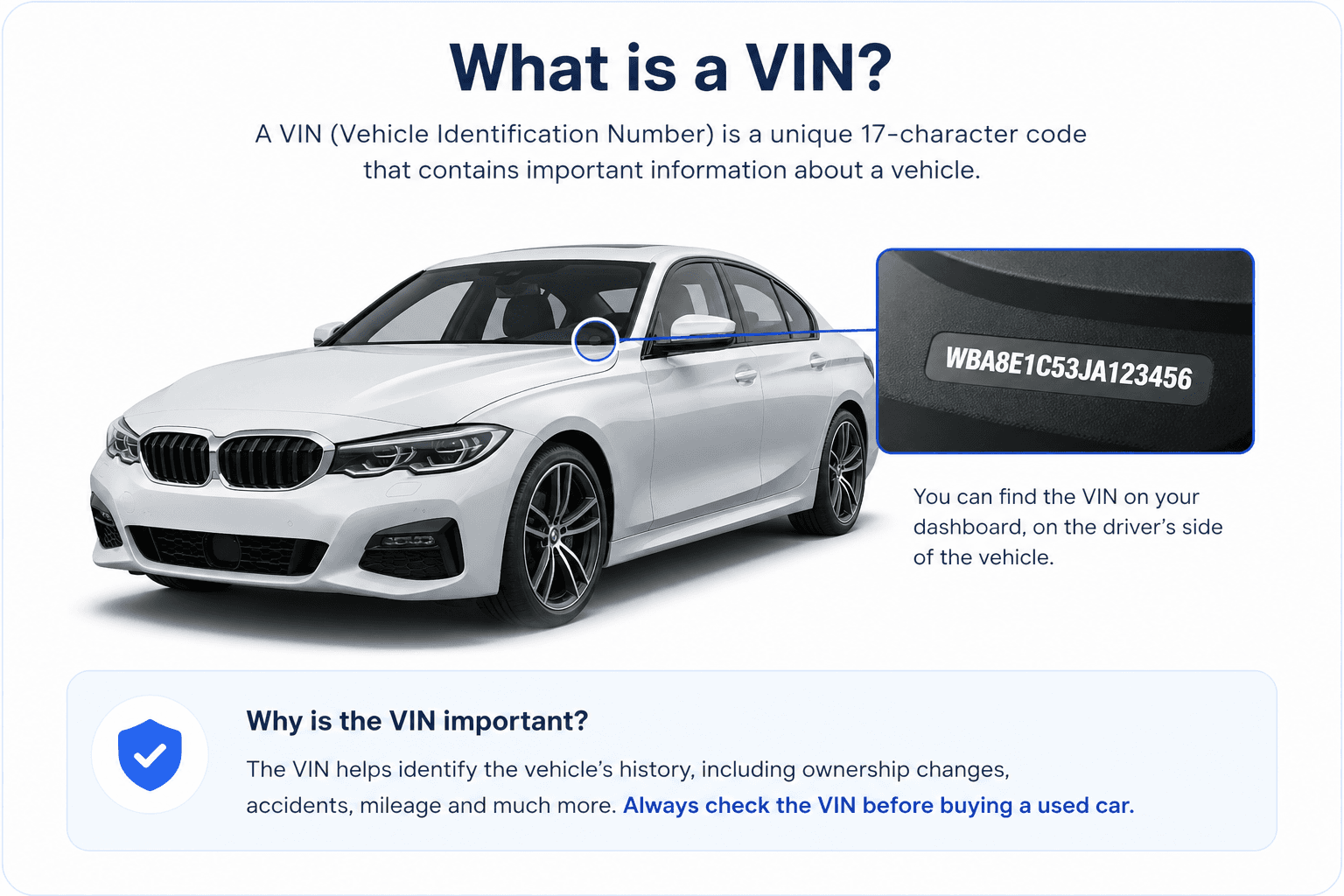
Where to find the VIN
Common VIN locations include the base of the windscreen, the driver or passenger door frame, under the bonnet, the bulkhead, the chassis and the V5C logbook. Some vehicles also show the VIN in service documents, finance paperwork or dealer records.
The exact location varies by manufacturer. If a seller cannot show you the VIN, or discourages you from checking it, pause the purchase until the details can be verified.
Why VIN comparison matters
The VIN helps confirm that the car in front of you is the same car described in the paperwork and report. If the VIN on the V5C does not match the windscreen plate, chassis number or seller details, that may indicate a clerical issue, a replaced part or a more serious identity concern.
A VIN comparison is especially useful when a vehicle has had plate changes, imported history, accident repairs or incomplete paperwork. It gives you another way to check that the story is consistent.
Use VIN with other checks
A VIN check should not be used in isolation. Combine it with a registration check, MOT history review, mileage review, tax status and write-off information where available.
If the full Fast Car Check report includes a VIN, use it as a practical reference at the viewing. Compare it slowly and character by character, because similar letters and numbers can be misread.
VIN checks for UK used car buyers
The VIN is especially important when buying from a private seller, viewing a car away from the registered address or looking at a vehicle that has had plate changes. It helps you connect the physical car with the report, the V5C logbook and the seller story.
If the VIN is missing, covered, damaged or inconsistent, do not ignore it. Ask for a clear explanation and verify the details before paying a deposit. A genuine mistake may be possible, but a mismatch can also point to identity or paperwork risk.
Quick checklist
- Ask the seller for the registration number and VIN before viewing.
- Compare the report VIN with the V5C logbook.
- Check the windscreen VIN plate and chassis number.
- Look for signs of tampering or damaged VIN plates.
- Walk away or investigate further if the numbers do not match.